A people-centred organisation of the coast
COAST Foundation (Coastal Association for Social Transformation) is a national NGO dedicated to marginalised coastal communities of Bangladesh. Since its establishment in Charfassion, Bhola in 1998, it has worked for inclusive and sustainable development with a special focus on disadvantaged people in coastal areas.
From a project on Bhola to a national NGO
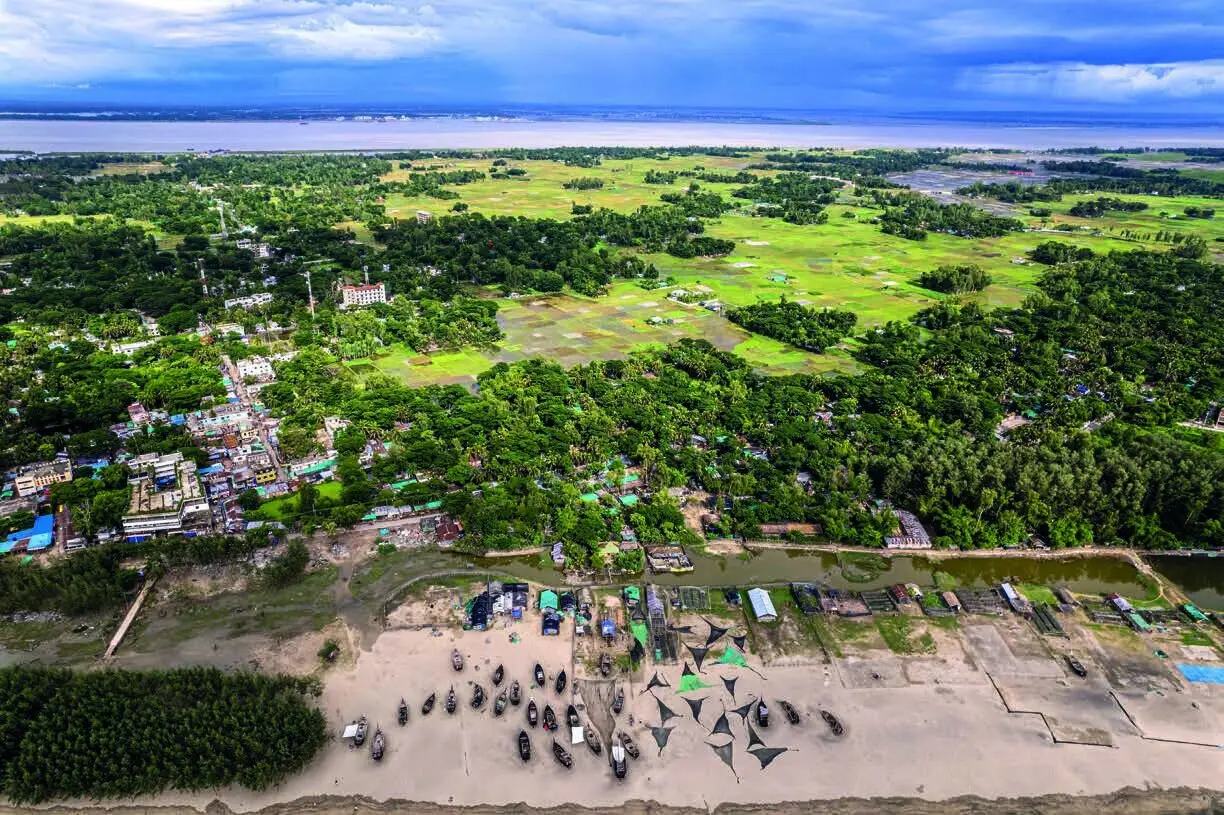
COAST emerged from a ten-year-old project of an international NGO in the southern part of Bhola island, at the mouth of the Bay of Bengal where the Ganges and Brahmaputra meet, one of the world's most dangerous cyclone zones.
Between 1994 and 1997 the project went through a careful nationalisation: reducing overheads, building capacity, widening coverage, turning beneficiaries into active partners, and finally forming a board to ensure local accountability. COAST Trust was established on 25 November 1997 and registered with the NGO Affairs Bureau in February 1998. In 2021 it became COAST Foundation.
COAST was registered as the Coastal Association for Social Transformation and holds special consultative status with the UN Economic and Social Council (ECOSOC).
- Before 1998
A project on Bhola island
COAST began as a project of an international NGO in southern Bhola, at the mouth of the Bay of Bengal, one of the world's most dangerous cyclone zones. Between 1994 and 1997 it went through a careful nationalisation process.
- 1997
COAST Trust founded
Registered under the Trust Act (No. 64) on 24 September 1997; the Memorandum of Association gives 25 November 1997 as the date COAST Trust was established.
- 1998
Registered with the NGO Affairs Bureau
Registration No. 1242 with the NGO Affairs Bureau, Prime Minister's Office, on 24 February 1998. Staff and board agreed the organisation's values in 1998-99.
- 2007
Microcredit licence
Licensed by the Microcredit Regulatory Authority (No. 00956-04041-00068) on 29 November 2007.
- 2021
COAST Foundation
Renamed COAST Foundation (approved by the NGO Affairs Bureau on 6 June 2021) and registered under the Societies Registration Act, 1860 (No. S-13496/2021).
- 2025
136 branches, 179,000 participants
Seven coastal regions, Start Network's Safeguarding Champion award, and the Sphere Community Bangladesh secretariat for 2025-26.
What we are striving for
Our vision
Striving for a world of equity, justice and free from poverty, where human rights and democracy are the common cultures.
Our mission
COAST Foundation will organize strategically important development activities to facilitate sustainable and equitable improvement, especially in coastal areas of Bangladesh, for the disadvantaged sections of the population through increased participation in socio-economic, cultural and civic life.
Objectives
The Memorandum of Association sets out what the Foundation is constituted to do.
- Facilitate sustainable livelihoods of the poor and marginalised, especially women and children, through microfinance and enterprise development.
- Support the poor to realise their legitimate demands and rights from government and other institutions.
- Protect and preserve ecological and natural resources, especially of the Bay of Bengal, alone or in partnership with others.
Fourteen values, written together
In October and November 1998, COAST staff developed these values through a series of workshops while setting the organisation's direction for the next ten years. The Board of Trustees approved them in February 1999, and COAST's work is still reviewed against them with staff.
Our existence
We exist for the poor and for their interest.
Work approach
What we do is not the final answer. A progressive cycle of learning, action and experience paves the way to our destination.
Learning
We work on what we know and say what we understand. We never hesitate to admit mistakes and are always ready to learn.
Human potential
Every human being is born with equal potential. Given equal opportunity and resources, everyone can develop equally.
Economy
We practise economy in our personal lives and in organisational behaviour; consumer culture endangers people and institutions alike.
Honour
We may differ in salary and responsibility, but we are all equal in showing honour to each other.
Gender
Women and men are equal. Inequality is imposed by socio-cultural norms, so women deserve positive discrimination.
Participation
Those who make, implement or are affected by a decision have the right to be heard before it is made.
Culture
We learn from the best of the world's cultures while upholding our own traditions and heritage.
Communication
Our thinking must stay updated, modern and universal, so we make the best use of communication and education.
Relation & accountability
We keep good relations with all without compromising our values, and we are accountable to anyone for our work.
People's organisation
The poor need their own organisations. We play an animator role in building an alternative power structure.
Governance
We mediate demands and accountability between government agencies and people, rather than building parallel services.
Environment & diversity
We respect ecological balance and local knowledge, and think globally while acting locally.
Microfinance that pays for rights-based work
COAST is not minimalist in its microfinance. Credit and savings are tailored to poverty reduction, matched to local livelihoods, and run transparently with members. The surplus funds COAST's core programme: people's organisations, primary healthcare, a disaster response fund and community radio.
Non-core projects are delivered with donors and partners. Throughout, COAST emphasises cost recovery and a gradual reduction of dependence on external funding.
Core programme
Microfinance, primary health care, people's organisations, disaster response fund, community radio.
Partnership projects
Development and humanitarian projects with national and international partners.
Advocacy
Local to global, with EquityBD: climate, tax and debt justice, aid effectiveness.
Localisation
The BD CSO process for locally led humanitarian response and peacebuilding.
Participation, accountability, transparency
- Executive Committee meets at least quarterly; the General Council holds an Annual General Meeting
- Senior Management Team meets weekly and quarterly
- Special consultative status with UN ECOSOC
- One of the first NGOs in Bangladesh to adopt the Right to Information
- Complaint response mechanism with a whistle-blowing policy and complaint boxes in every office
- Separate Internal Audit and MEAL (monitoring, evaluation, accountability and learning) sections
- Annual external audit by a firm enlisted with the NGO Affairs Bureau
- Meeting minutes, policies and circulars published openly
Stand with the coastal poor
Partner with us, support emergency response or join our work. Every contribution reaches families living on the front line of climate change.